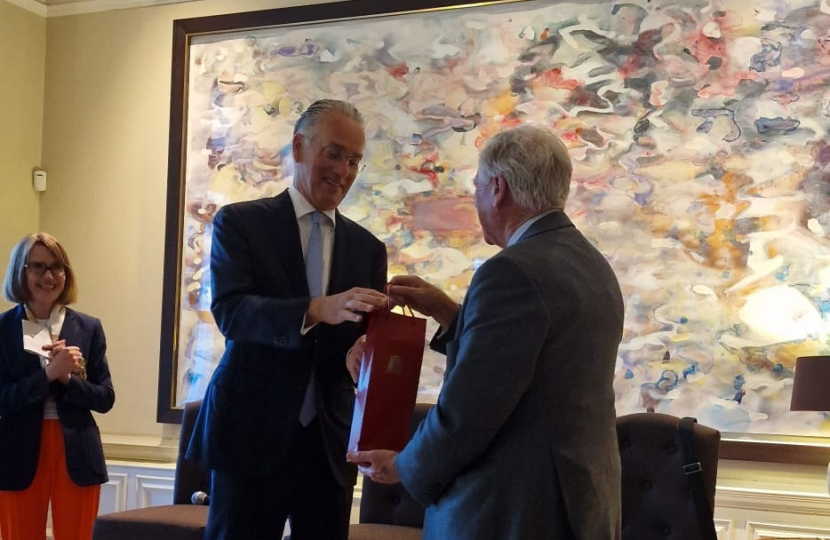
Visit by CFCC Members to the Residence of H.E The Ambassador of the Kingdom of The Netherlands,
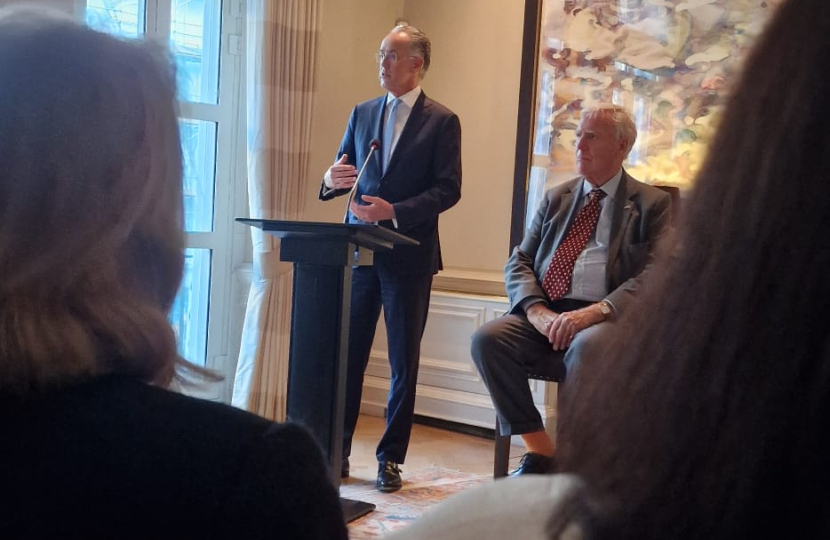
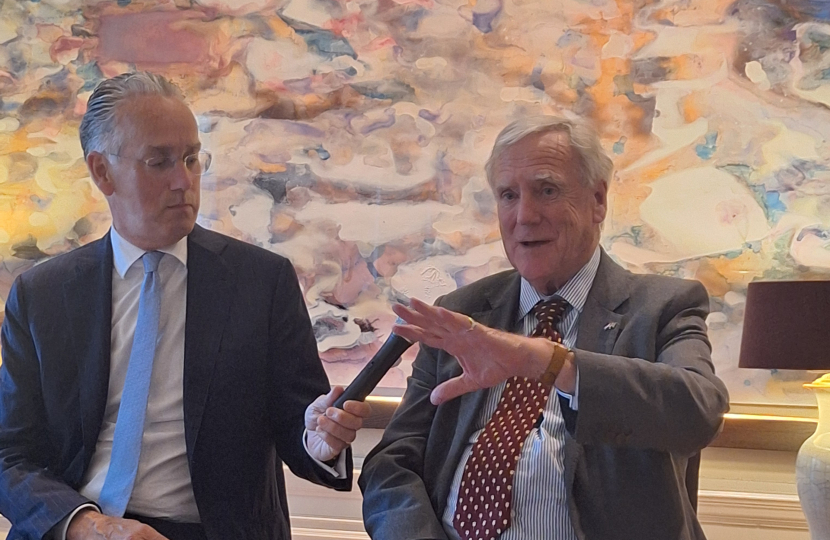
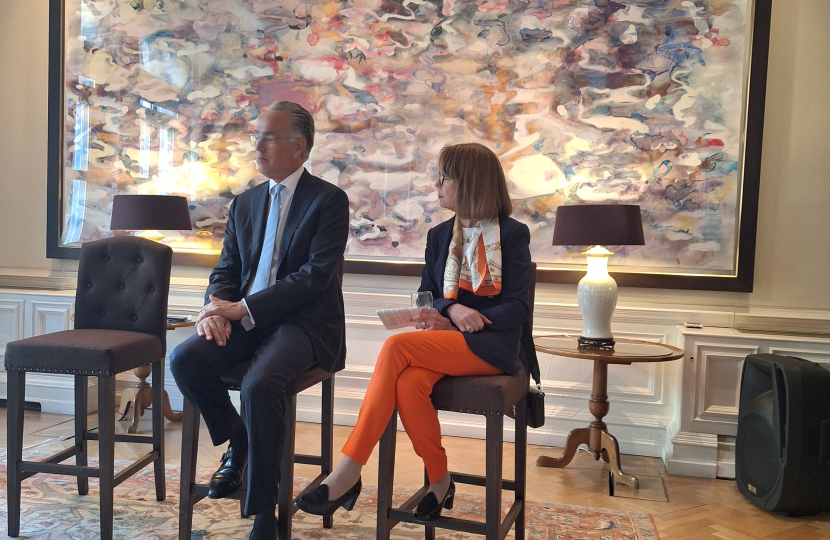
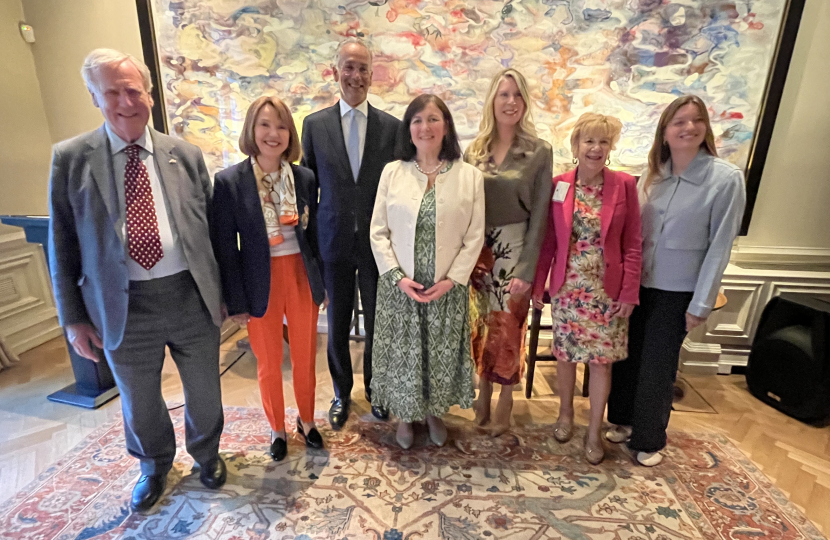
On Tuesday 16th April, approximately 60 Members of the Conservative Foreign & Commonwealth Council (CFCC) were warmly received by His Excellency Mr Paul Huijts, The Ambassador for the Kingdom of The Netherlands at an evening reception and discussion held at the Ambassador’s Residence.
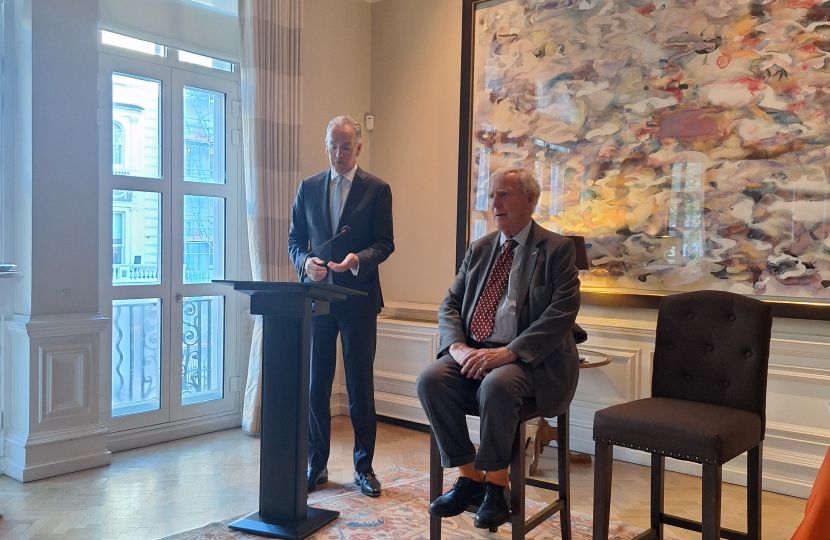
In introducing His Excellency to CFCC members, Lord Taylor of Holbeach CBE, Patron of the CFCC, referred to H.E Paul Huijts as a big friend of the UK who is making a difference and giving a strong voice to the long, special relationship between the two Nations.
He pointed out that the UK and The Netherlands have 1000 years of close trading relationship and an intertwining history (the occasional 17th century naval battles not withstanding).
He said that the Dutch and the British have a similarity of approach on many issues - on Defence, NATO, culture and so very much more, and he invited the Ambassador to be direct when discussing the relationship going forward.
Ambassador Huijts said he needed no encouragement to talk frankly, as is his way. The UK has always been close to Dutch hearts. He said we are now living in uncertain times and there is no greater need for the two nations to be with each other than now. Both countries face similar challenges: the war in Ukraine, the war in the Middle East, economic weaponisation, trans-Atlantic tensions, slow growth, immigration, housing needs and cost of living challenges, amongst others.
What to do? Both countries have a lot to build on. They are strong democracies and are governed by the rule of law. They are strong in the sciences and have excellent companies, innovation and a public sector that contributes to good living standards. In effect there are no obvious differences to note and those are all positive indicators.
The Ambassador said his address would concentrate on The Netherlands’ international agenda, defence and foreign affairs.
On defence, NATO is and will be, the cornerstone for The Netherlands. That said, we the European side of NATO need to be stronger and depend less on the US. The Netherlands is actively increasing its defence expenditure over the years to 3.5% of GDP as agreed at The Hague NATO summit. To achieve this, painful decisions have to be made by government. The new government in The Netherlands has indicated in their coalition plans that they are willing to do so. But it’s not just about the level of spending. The Netherlands as European NATO countries have to team up, combine procurement and break through silos to create a European defence industry that is competitive and at the forefront of innovation.
There also has to be a wider debate on national resilience. Whereas our two countries are not at war with anyone, we are not at peace either. Hybrid attacks on our societies by hostile powers are frequent and form a serious risk for our institutions, industries and services. This is a vital subject requiring cooperation against cyber and other attacks. But it also means that citizens have to become more resilient and self reliant when society endures serious disturbances. That’s why The Netherlands' government started a campaign to inform citizens on what they can do to take care of themselves and their neighbours in the first days after a great manmade or natural disaster when government cannot provide services and help as in normal times.
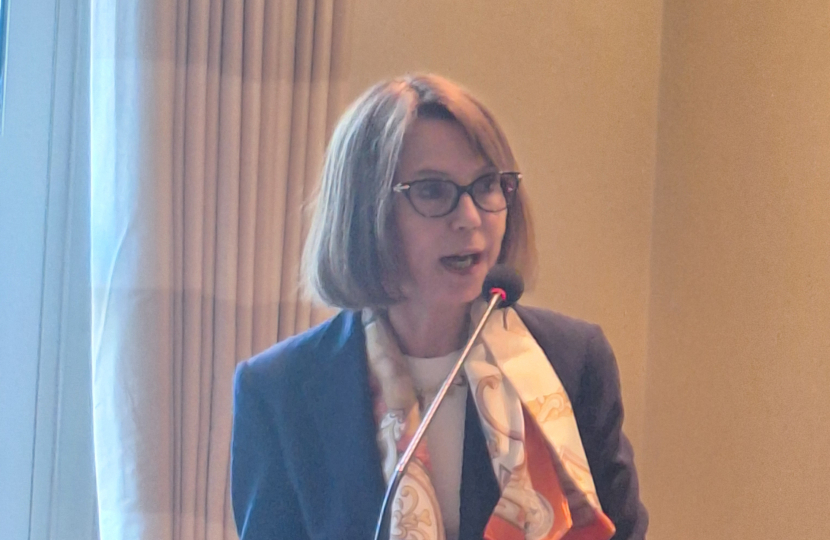
Following this powerful address by the Ambassador, Baroness Catherine Meyer CBE, Chairman of the CFCC, took questions. These ranged from deregulation, NATO cooperation, external threats, the need for deterrents, the unlikelihood of an European Army, the UK re-applying to rejoin the EU and an historical comment on how much the UK had learned from The Netherlands during the period of the joint sovereignty of King William & Queen Mary - Finance, Trade, ‘My Word is my Bond’ and much else.
Regarding Brexit, the Netherlands lost a sibling but apart from that, the relationship continues to run deep if not entirely in the same way as before.
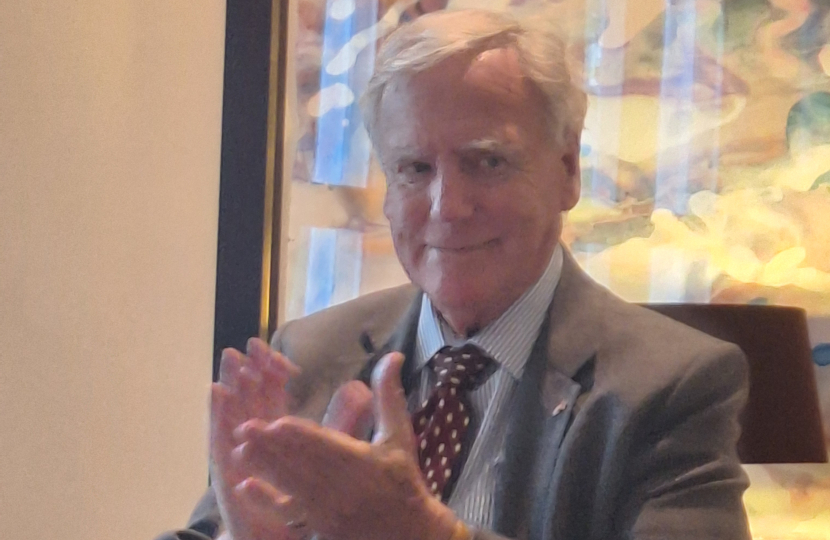
Grateful thanks were given to the Ambassador and his wife for receiving the CFCC and to the Embassy personnel for their hard work in ensuring the considerable success of the evening. Thanks as well to Lord Taylor who is also President of the Anglo- Netherlands Society who initiated the evening.
William Knight